
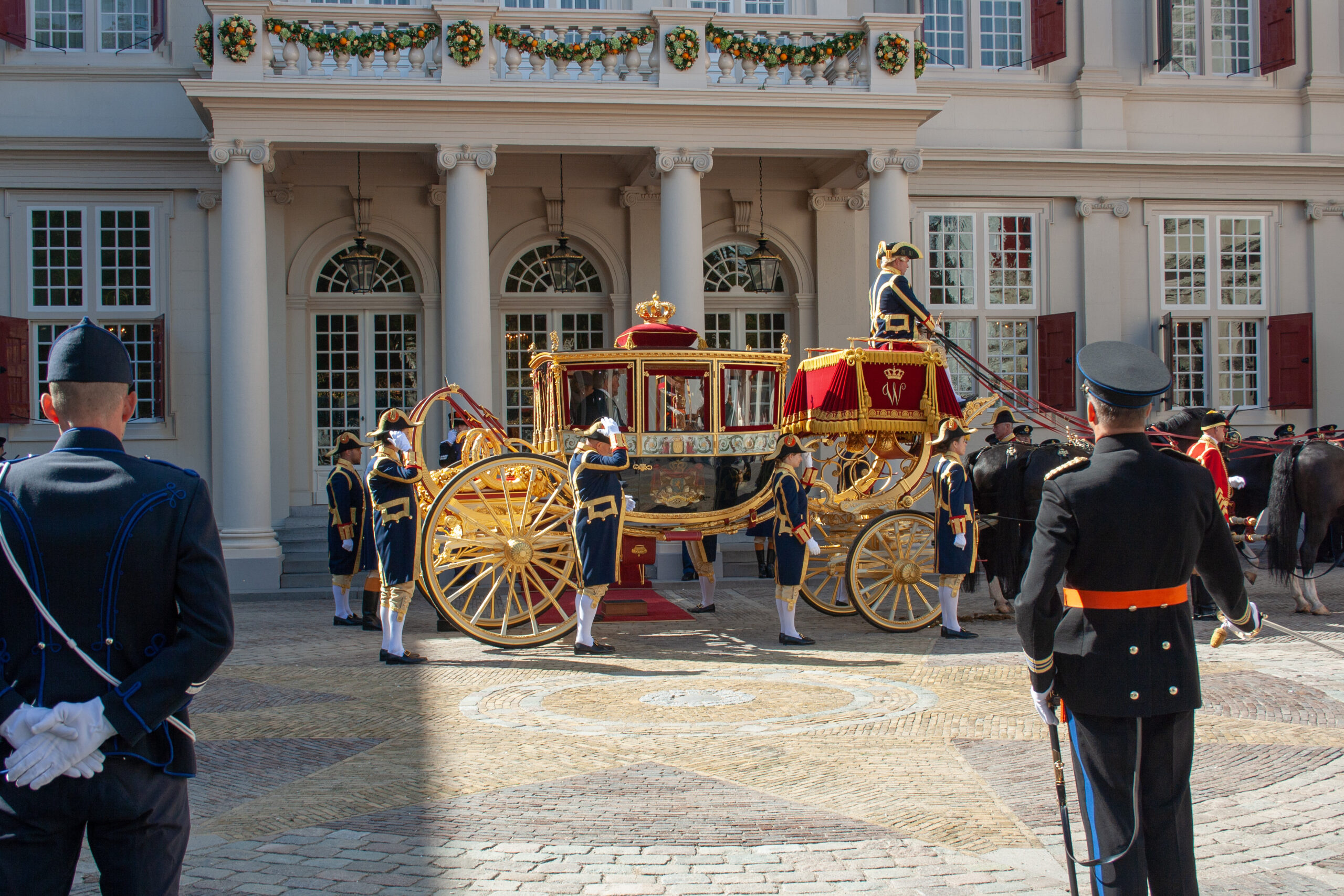
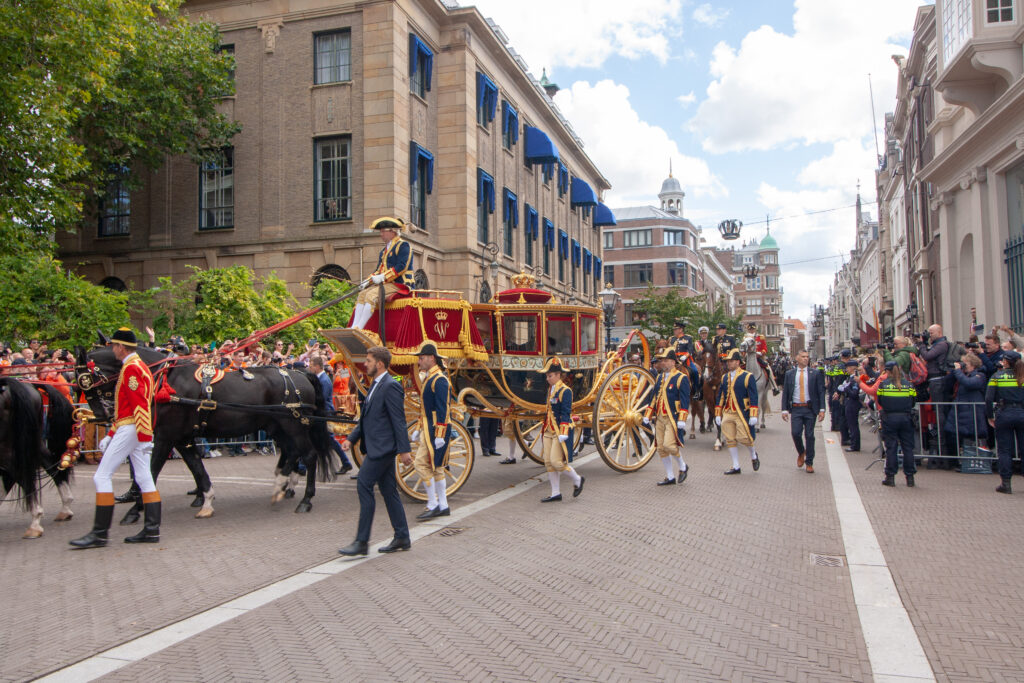
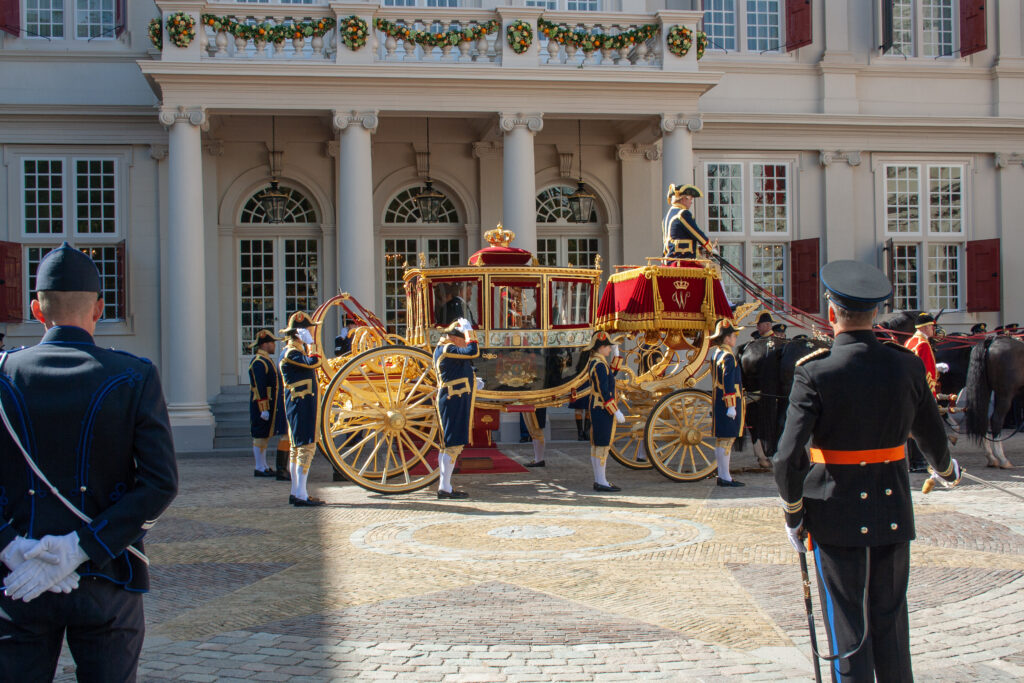
Prinsjesdag is de traditionele start van het parlementaire jaar voor de Eerste en Tweede Kamer in Den Haag. Op de derde dinsdag in september spreekt Koning Willem-Alexander de troonrede uit waarin de regering haar belangrijkste plannen voor het komende jaar bekendmaakt. Voorafgaand aan het voorlezen van de troonrede trekken Koning Willem-Alexander en Koningin Maxima in de Glazen Koets, gevolgd door andere belangrijke leden, met een rijtoer van Paleis Noordeinde via het Lange Voorhout naar de plaats waar dit jaar de troonrede zal plaatsvinden.
Programma Prinsjesdag 2026 (onder voorbehoud)
12:45 uur – Glazen Koets rijdt van de Koninklijke stallen naar Paleis Noordeinde
13:00 uur – Vertrek rijtoer koninklijke stoet van Paleis Noordeinde naar de Koninklijke Schouwburg
13:15 uur – Troonrede Koninklijke Schouwburg
13:50 uur – Glazen Koets vertrekt vanaf de Koninklijke Schouwburg richting Paleis Noordeinde
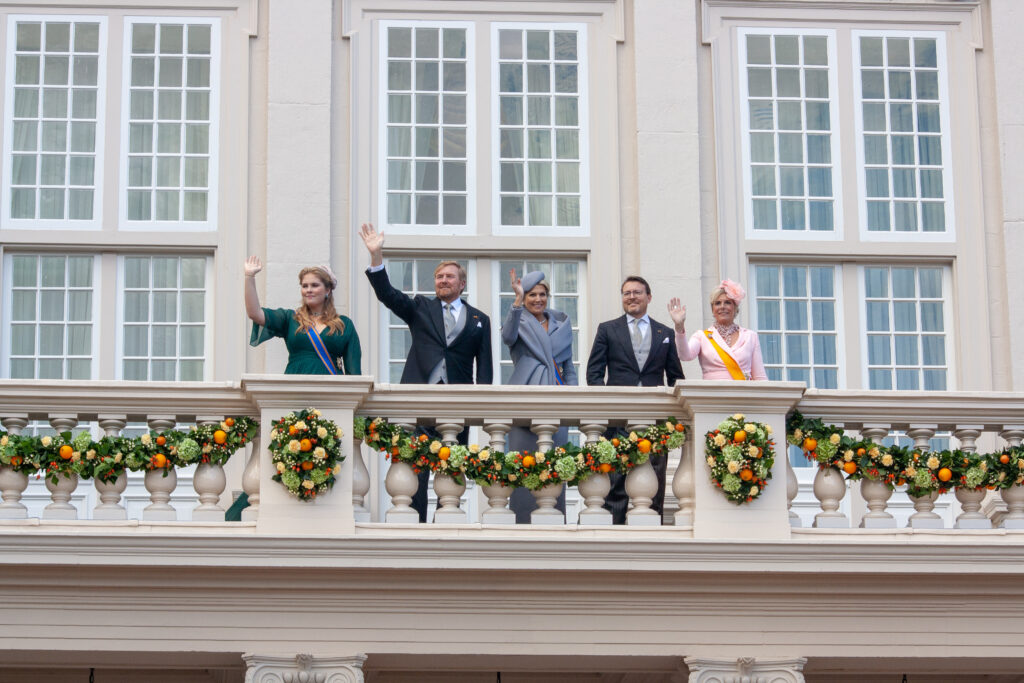
14:00 uur – Balkonscène Paleis Noordeinde
Speel de Troonrede Bingo!
Luister jij op Prinsjesdag naar de Troonrede? Doe dan de Troonrede Bingo! Download je bingokaart en streep tijdens de troonrede van de koning de woorden af die je hoort. Wie als eerste een volle kaart heeft, maakt kans op een goodybag vol leuke cadeaus. De Troonrede Bingo is een samenwerking tussen de Eerste Kamer, ProDemos en Prinsjesfestival.
Bingo? Lever je kaart in en maak kans op een goodybag met verrassingen én een bezoek aan de voorzitter van de Eerste Kamer, Mei Li Vos! (Verstuur je naam, leeftijd en telefoonnummer naar info@prinsjesfestival.nl)
Route rijtour tijdens Prinsjesdag
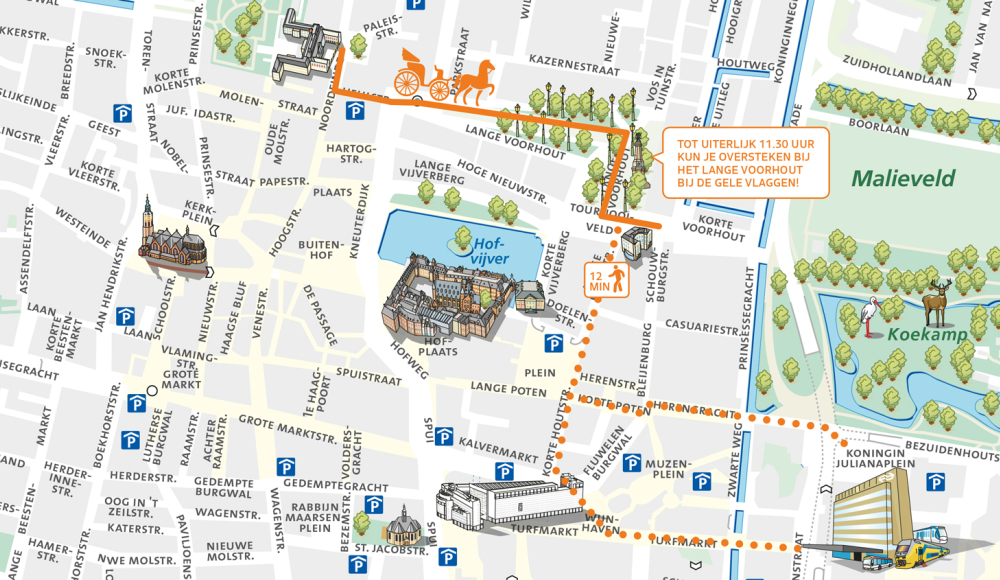
Vanwege de renovatie van het Binnenhof wordt er een alternatieve route gebruikt. De gebruikelijke route was in gebruik sinds 1925, toen door een verhoging van de straat het niet langer mogelijk was om onder de Stadhouderspoort aan de voorzijde van het Binnenhof door te gaan. Nu rijdt de Glazen Koets via het Noordeinde de Kneuterdijk op, over het schelpenpad van het Lange Voorhout en het Korte Voorhout naar de Koninklijke Schouwburg. De Verenigde Vergadering der Staten-Generaal en het voorlezen van de troonrede door de Koning, vinden hier plaats.
Tijdens de traditionele rijtoer wordt er elke minuut een saluutschot afgevuurd door de batterij 11de Afdeling Rijdende Artillerie (Gele Rijders) op het Malieveld.
Vanaf Den Haag Centraal Station zijn er twee looproutes (zie oranje stippellijn) naar het Lange Voorhout. Hier kun je de rijtoer van de Glazen Koets bekijken.
1. Centraal Station, Herengracht, Korte Poten, Plein, Korte Vijverberg, Lange Voorhout
2. Centraal Station, Turfmarkt, Kleine Houtstraat, Plein, Korte Vijverberg, Lange Voorhout
Balkonscène
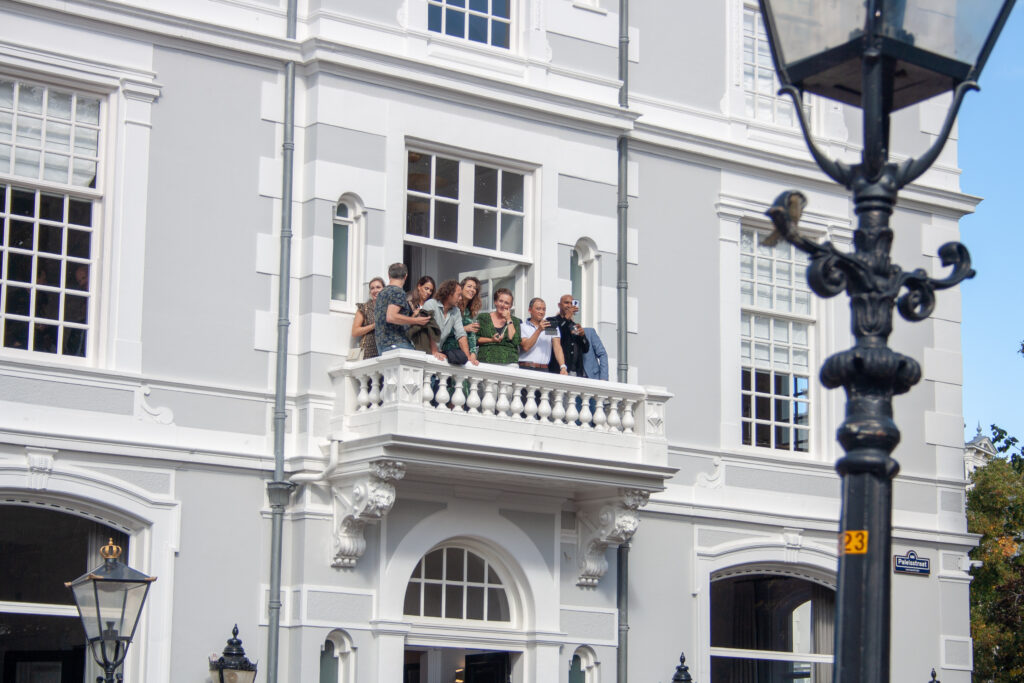
Rond 13:50 uur vertrekt de Koninklijke Familie weer per Glazen Koets naar Paleis Noordeinde. Nadat Koning Willem-Alexander en de andere leden van het Koninklijk Huis zijn teruggekeerd op Paleis Noordeinde, volgt rond 14:00 uur de balkonscène waarbij de koninklijke familie op het balkon door het volk wordt toegejuicht. Deze balkonscène is om veiligheidsredenen in de jaren ’60 ingevoerd. Voordien stapte de familie, als het weer het toeliet tijdens Prinsjesdag, na terugkomst in het paleis van de Glazen Koets over in een open koets die met dravende paarden door Den Haag reed.
Veiligheidsmaatregelen
Gedurende Prinsjesdag worden er in Den Haag extra veiligheidsmaatregelen genomen. Voor een veilig verloop van Prinsjesdag kan de politie je tas controleren. Aangeraden wordt om geen grote tassen of rugzakken mee te nemen. Wie een rugzak meeneemt, kan er langer over doen om langs controles te komen. Neem liever een plastic of linnen tasje mee.
Geschiedenis Prinsjesdag
Het woord ‘Prinsjesdag’ werd al in de 17e en 18e eeuw gebruikt voor de viering van de verjaardagen van de Prinsen van Oranje. Vooral die van stadhouder Prins Willem V leidde tot grote volksfeesten. Dat kwam er ook voor zijn zoon toen die in 1813 door een opgetogen bevolking na zijn ballingschap werd ingehaald en tot koning gekroond. Mensen zijn het woord ‘Prinsjesdag’ toen gaan gebruiken voor elke feestelijke gebeurtenis van een Oranje. Verjaardagen, bruiloften en dus ook voor de opening van de Staten-Generaal.
Glazen Koets
De Glazen Koets is de trots van het Koninklijk Staldepartement, en dat is niet voor niets. De Glazen Koets is het oudste rijtuig uit het Koninklijk Huis en wordt alleen bij speciale gelegenheden gebruikt. Zo was het rijtuig onder meer te zien bij het huwelijk van Prinses Juliana en Prins Bernhard en het huwelijk van Prinses Beatrix en Prins Claus.
Koning Willem I bestelde de Glazen Koets in 1821 bij de Brusselse rijtuigbouwer Pierre Simons die het rijtuig in 1826 afleverde. De Glazen Koets die Willem I geleverd kreeg, combineerde voortreffelijk praktische en ceremoniële functies. Het rijtuig behoorde technisch gesproken tot de absolute top in de rijtuigenbouw. De rijke versieringen verleenden de juiste status aan de koninklijke gebruiker en de nationale en vorstelijke symboliek, die in veelheid en op gevarieerde wijze in en op het rijtuig was aangebracht, kon het publiek moeilijk ontgaan.
De opvallend grote koets heeft een eenvoudig gevormde donkerblauwe kast die is afgezet met een brede vergulde lijst van laurier- en eikenbladeren. De naam van de koets komt van het glas dat de prachtige, maar kwetsbare, ornamentenrand die onder de vensters op de kast van de koets is aangebracht beschermt. Het interieur is bekleed met purper en beige fluweel en voorzien van geborduurde passementen, de zitkussens zijn gevuld met een vulling van paardenhaar. De hemel is gemaakt van geborduurde beige en hemelsblauwe zijde.
Verkeersmaatregelen tijdens Prinsjesdag
Tijdens Prinsjesdag zijn sommige straten in de Haagse binnenstad afgesloten en garages beperkt bereikbaar. Geadviseerd wordt om met de fiets of het openbaar vervoer te komen. Enkele tram- en buslijnen rijden een andere route. Kijk op de website van de HTM voor meer informatie.
De gemeente plaatst hekken bij straten die voor Prinsjesdag afgesloten worden. De route van de koets is tussen 12:45 uur en 14:30 uur aan beide kanten afgezet. Voetgangers kunnen de route oversteken bij de vlaggen tot 11:30 uur. Van 11:30 uur tot 14:30 uur zijn de oversteekplaatsen voor voetgangers afgesloten.
Royal Procession
Prinsjesdag is the traditional start of the parliamentary year for the Senate and House of Representatives in The Hague. On the third Tuesday of September, King Willem-Alexander delivers the Speech from the Throne, in which the government announces its main plans for the year ahead. Before the Speech from the Throne is delivered, King Willem-Alexander and Queen Máxima travel in the Glass Carriage, followed by other members of the royal party, during a ceremonial procession from Noordeinde Palace via Lange Voorhout to the location where the speech will take place that year.
Prinsjesdag 2026 Programme
12:45 PM – The Glass Carriage departs from the Royal Stables to Noordeinde Palace
1:00 PM – Departure of the Royal Procession from Noordeinde Palace to the Royal Theatre
1:15 PM – Speech from the Throne at the Royal Theatre
1:50 PM – The Glass Carriage departs from the Royal Theatre towards Noordeinde Palace
2:00 PM – Balcony scene at Noordeinde Palace
Take part in the Speech from the Throne Bingo!
Do you listen to the Speech from the Throne on Prinsjesdag? Then join the Throne Speech Bingo! Download your bingo card and cross off the words you hear during the King’s Speech from the Throne. The first person to complete their card has a chance to win a goody bag filled with fun prizes. The Throne Speech Bingo is a collaboration between the Senate, ProDemos, and Prinsjesfestival.
Route of the Royal Procession during Prinsjesdag
Due to the renovation of the Binnenhof, an alternative route will be used. The traditional route had been in use since 1925, when a street elevation made it impossible for the procession to pass under the Stadhouderspoort at the front of the Binnenhof. This year, the Glass Carriage will travel via Noordeinde, along Kneuterdijk, across the shell path of Lange Voorhout and Korte Voorhout, towards the Royal Theatre. The United Assembly of the States General and the King’s Speech from the Throne will take place here.
During the traditional royal procession, a ceremonial cannon shot is fired every minute by the Battery of the 11th Royal Horse Artillery Regiment (the “Yellow Riders”) at the Malieveld.
From The Hague Central Station, there are two walking routes (see the orange dotted lines) to Lange Voorhout. From here, you can watch the Royal Procession of the Glass Carriage.
- Central Station – Herengracht – Korte Poten – Plein – Korte Vijverberg – Lange Voorhout
- Central Station – Turfmarkt – Kleine Houtstraat – Plein – Korte Vijverberg – Lange Voorhout
Balcony Scene
At around 1:50 PM, the Royal Family departs in the Glass Carriage for Noordeinde Palace. Once King Willem-Alexander and the other members of the Royal House have returned to the palace, the Balcony Scene takes place at approximately 2:00 PM. During this moment, the Royal Family appears on the palace balcony, where they are greeted and cheered by the public. The Balcony Scene was introduced in the 1960s for security reasons. Before then, weather permitting, the Royal Family would transfer from the Glass Carriage to an open carriage after returning to the palace, riding through the streets of The Hague in a procession drawn by trotting horses.
Security Measures
Additional security measures will be in place throughout The Hague during Prinsjesdag. To help ensure a safe and secure event, the police may inspect your bag. We recommend that you do not bring large bags or backpacks, as these may result in longer waiting times at security checks. Instead, we advise bringing a small tote bag or lightweight shopping bag.
History of Prinsjesdag
The term Prinsjesdag dates back to the 17th and 18th centuries, when it was used to celebrate the birthdays of the Princes of Orange. The birthday of Stadtholder Prince William V, in particular, was marked by large public celebrations. Similar festivities took place for his son, who returned from exile in 1813 to an enthusiastic welcome and was later crowned King of the Netherlands. From that time on, the name Prinsjesdag came to be used for any festive occasion involving the House of Orange, including birthdays, royal weddings, and eventually the ceremonial opening of the States General.
Glass Carriage
The Glass Carriage is the pride of the Royal Stables Department, and for good reason. It is the oldest carriage in the Royal Household’s collection and is reserved exclusively for special occasions. Over the years, it has been used for major royal events, including the weddings of Princess Juliana and Prince Bernhard, and Princess Beatrix and Prince Claus.
King William I commissioned the Glass Carriage in 1821 from the Brussels carriage builder Pierre Simons, who completed and delivered it in 1826. The carriage perfectly combined practical functionality with ceremonial grandeur. Technically, it represented the highest standards of carriage craftsmanship of its time. Its rich decorations reflected the status of the monarch, while the many national and royal symbols incorporated into its design made a lasting impression on the public.
The remarkably large carriage features a simple dark blue body framed by a wide gilded border of laurel and oak leaves. Its name comes from the protective glass panels that shield the delicate ornamental decoration beneath the carriage windows. The interior is upholstered in purple and beige velvet, finished with embroidered trimmings, while the seat cushions are filled with horsehair. The roof lining is made of embroidered beige and sky-blue silk.
Traffic Measures During Prinsjesdag
During Prinsjesdag, several streets in The Hague city centre will be closed, and access to parking garages will be limited. Visitors are advised to travel by bicycle or public transport. Some tram and bus services will follow alternative routes. Please visit the HTM website for the latest travel information.
The municipality will place barriers at streets that are closed for Prinsjesdag. The route of the Glass Carriage will be closed on both sides between 12:45 PM and 2:30 PM. Pedestrians can cross the route at the designated flag-marked crossing points until 11:30 AM. From 11:30 AM to 2:30 PM, these pedestrian crossings will be closed.